

I’m in yoga teacher training right now. This week we’re on the body inclusivity lesson.
The teacher is talking about appreciating what your body can do for you. Joyful movement. How wonderful it is that your body is able to do things.
And I’m sitting there with a question: what happens when your body can’t do things?
Because mine often can’t.
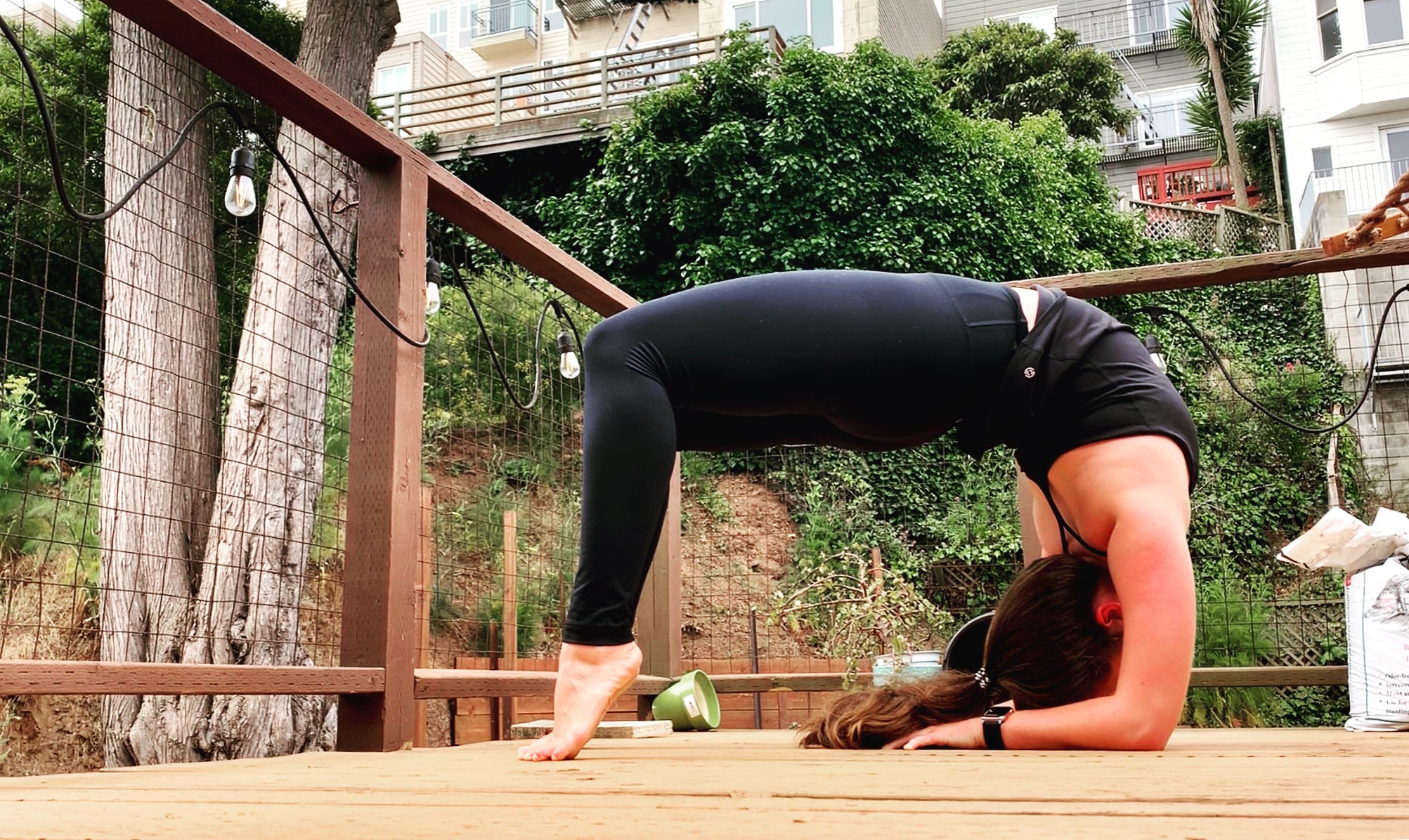
body acceptance
In civilized circles, we have mostly agreed to stop ranking bodies by how they look. Now, instead, we offer them gratitude for what they can do.
We moved the goalpost from appearance to output.
The main obstacle for this worldview is disability, which often gets ‘resolved’ by some version of the following: Even if you can’t run or dance or lift, your body is still working to keep you alive. Your heart is beating. Your lungs are breathing. Isn’t that something to appreciate?
I have beef with this for two reasons:
First, it’s a consolation prize. Everyone else gets to marvel at what their body can do, and you get to be grateful you’re not dead. Basically a participation trophy for staying alive.
Second, many people do live with challenging hearts, lungs, immune systems, etc. The “autopilot” we are supposed to be grateful for is very often part of what is not working. So, “At least the basics are working” becomes a small cruelty at best.
Joyful movement cannot help when movement isn’t available. Basic function cannot serve as the fallback when basic function is failing. Every version of appreciate your body assumes the body is, at some level, cooperating.
What Are Your Biggest Energy Leaks?
Ever wondered which coastal paradise matches your soul? Dive into this fun quiz to discover your perfect seaside escape. Whether you crave adventure or relaxation, your dream beach awaits. Ready to find out where the waves are calling you?
disability is part of life
We often talk as if “sick” and “well” are separate categories. The sick people over here. The well people over there.
But, there is no over there.
Disability is a group every person joins if they are fortunate enough to live that long. Disability writers often call everyone who hasn’t gotten there yet temporarily able-bodied. Age, accident, illness.. It’s everyone’s future.
Celebrate what your body can do works until your body can’t. And every body, eventually, can’t.
a partner i can’t divorce
The frame I currently use is: my body is a partner I can’t divorce.
A partner asks something different of me than a machine or a project.
I have to learn it. Listen to it. Hear what it needs instead of what I wish it needed.
Audre Lorde wrote in 1980 that women had been taught to see our bodies “only in terms of how they look and feel to others, rather than how they feel to ourselves, and how we wish to use them.”
Body positivity moved from “how I look” to “what I can do.” Lorde pointed inward: how does it feel from in here?
This relationship with my body has required skills I didn’t want to need.
I have learned to stop treating myself like an invasive weed that should be able to thrive growing in concrete. I don’t. Most things don’t. And frankly, it is worth the effort to find rich nourishing soil.
I have learned that what I want and what supports me can be (and often are) different things. Tomatoes and avocados are some of my favorite foods in the world, and my body has recently decided we are allergic to both of them.
Staying in the relationship requires attention. It does not require love. We can simply coexist, my body and I. But, at minimum, I need to be attentive to my body’s needs and communications to the best of my ability.
My body does not get everything it wants. But I also do not get everything I want because compromise supports the relationship.
the terms
Every relationship is temporary in the form we know it. People change. They leave. They die. Time changes the person beside you. It changes you too.
The relationship with my body follows the same terms. What works today may fail tomorrow. What fails today may come back tomorrow. A living system is constantly changing.
I can’t divorce this body, but I also can’t keep it. Acceptance means staying in relationship with the body that is here. Listening. Responding. Relearning its terms as they change.
FYI: Each week I share stories through For People and Planet, a newsletter focused on climate solutions and hope for the future. You can find it here if you’d like to follow along: forpeopleandpla.net
Further reading:


For more like this, follow me wherever you connect with friends:
Bluesky 💖 LinkedIn 💖 Mastodon 💖 X 💖 Instagram 💖 TikTok 💖 Threads 💖 YouTube 💖 Facebook
With love, Bri Chapman
Namaste 🙏🏻
As an active yoga person for three decades, I enjoyed this article. My wife and I find time for yoga and long walks sans phones 📞
What a unique lens as body acceptance is almost always used in reference to outward appearance. I have sometimes heard people say they feel "betrayed by their body" when health goes awry and in many respects this makes sense. Our body can present limitations we don't want, that feel unfair. I love how you dug into this. Our bodies are making this journey called life with us and struggling alongside us and doing their very best. Seeing this can be profound. <3