

when everything feels like a permanent choice, exploration becomes paralyzing.
you might stall because you can see multiple good futures and feel responsible for choosing the most aligned one.
the framework
James Clear offers a simple way to classify decisions:
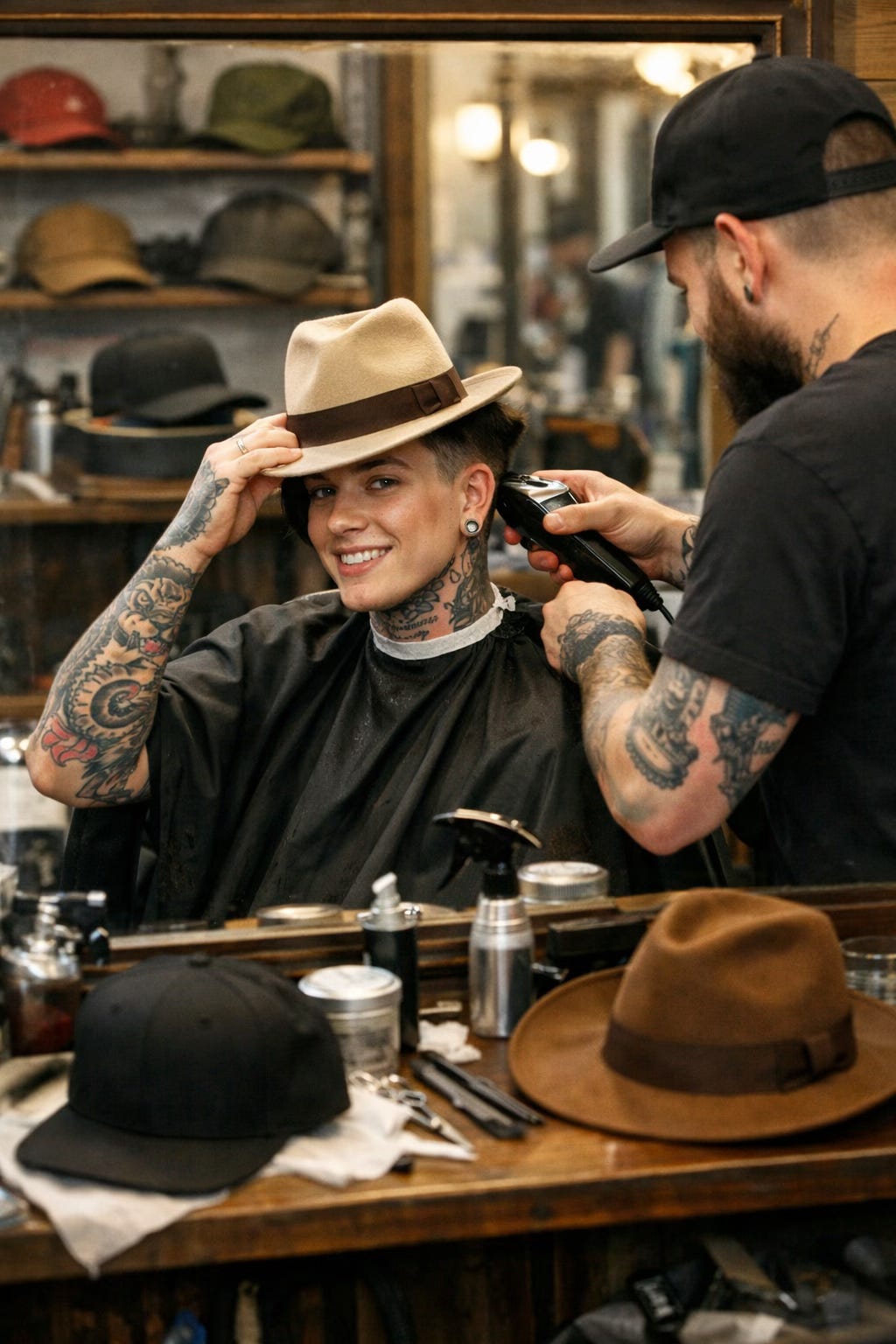
hat: try it on. if you don’t like it, take it off and try another. the cost of a mistake is low, so move quickly.
haircut: you can fix a bad one, but it won’t be quick, and you might feel foolish for a while. that said, trying something new is usually a risk worth taking. by this time next year, you will have moved on, and so will everyone else.
tattoo: once you make it, you have to live with it. some mistakes are irreversible. even years later, the decision leaves a mark. when you’re dealing with an irreversible choice, move slowly and think carefully.
most of the pressure we feel around decisions comes from treating everything like a tattoo when the majority of choices we make are actually hats.
why this matters for multi-passionate leaders
multi-passionate people struggle with decisions for a few reasons.
(1) they can see multiple good paths.
(2) they worry that choosing one means betraying another part of themselves.
(3) they’ve been taught that good leaders focus.
(4) they treat exploration as a failure to commit.
so they get stuck trying to pick the right project, waiting for the true calling to reveal itself, or agonizing over which direction to take.
I love this framework because it reframes leadership as sequencing instead of selecting. you don’t have to know your forever. you just have to know whether this is a hat.
the real cost is waiting
some decisions are one-way doors. once you walk through, you can’t come back. those need slow, careful thought.
but, most decisions are two-way doors. you can try them, see what happens, and change course if needed.
the biggest mistake is treating two-way doors like one-way doors: going slow on reversible choices. demanding certainty before action or waiting for perfect information that will never arrive.
in my experience, most decisions are two-way doors. they’re hats.
what kind of decision is this, actually?
projects are usually hats. you can start one, learn from it, and move to another. the cost of trying is low. the cost of waiting is high.
directions (strategic pivots, shifts in focus) are often haircuts. you commit for a season. you give it time to develop. if it doesn’t work, you adjust. you won’t lose a year. you’ll learn what works.
identities, public commitments, burning bridges are tattoos. rare. chosen consciously. treated with appropriate weight.
in complex systems, you can’t think your way into certainty. you have to act, observe, adjust. this is how adaptive systems learn. you don’t need to decide who you are in advance. you become it through what you try.
under uncertainty, clarity often comes from choosing reversibly.
most paths are just experiments. you’re allowed to change your mind. 💖
I read every reply. You don’t need to say anything “profound”—just write what’s true for you. Hit ‘reply’ or send me a message below.
FYI: I’ve started a weekly newsletter called For People and Planet. It’s a place where I highlight what’s working in the fight for a more balanced future. You can read it here: forpeopleandpla.net
Further reading


For more like this, follow me wherever you connect with friends:
Bluesky 💖 LinkedIn 💖 Mastodon 💖 X 💖 Instagram 💖 TikTok 💖 Threads 💖 YouTube 💖 Facebook
With love, Bri Chapman
You are putting into words how I’ve been living my life for the past 3 years. This is amazing! Thank you so much