

Imagine someone who needs to find a job.
They know this is a priority. They update their résumé. They open LinkedIn. They make a list of people to contact.
Then they get pulled toward things that seem totally random like: making a will. Setting up a trust. Researching whether they could ever buy a house.
From the outside, might seem like a total distraction. The job search is clearly the most urgent.
They might turn the distraction into an accusation: I keep wandering into projects that have nothing to do with what I need to do. I am too easily distracted, something is wrong with me!
But, if we move up a level, every one of those tasks is an attempt to create long-term financial stability for the family.
“Find a job” was a real goal, and, it was also too small to fully encompass the entirety of what they were trying to do.
What’s Your Core Value?
Unlock the secret behind every decision you make! Discover the core value that fuels your life, revealing its power and pitfalls. Dive deep into your authentic self and align your choices with what truly matters. Ready to transform your journey? Start now and embrace your true essence!
the wrong altitude
Typically, we discuss focus at the task level, for example:
Apply for a job.
Finish a proposal.
Record a podcast.
At that altitude, every alternative desire turns into a distraction.
So we try to become more disciplined. We make tighter plans. We cut away interests that seem unrelated. We blame ourselves for being too easily distracted by shiny new interests.
But if we are able to zoom out one level, often the scattered “distracting” pieces are part of a bigger picture.
The person looking for a job may be more broadly focused on the financial wellbeing of their family.
A leader moving between strategy, coaching, and culture actually might be focused on helping their team navigate a large organizational change.
The artist studying biology, migration, and grief may be focused on belonging.
The broader direction remains the same even as the tasks change.
the returning pattern
I have written before about the lie of the niche. The lie of the niche is the pressure to narrow ourselves until we become easy to describe, evaluate, and sell.
One thing I’ve noticed about capitalism in general is it likes to make us hard on ourselves. People who are hard on themselves are more docile, accept more mistreatment, and believe they deserve less leisure and money. The lie of the niche is so powerful under capitalism because it makes us feel like something is wrong with us for wanting more than one tiny, narrow thing.
We look at the surface of our lives and see unrelated projects. Work over here. Fun over there. Family over here. Friends over there. Hobbies yet still somewhere else. A strange obsession we cannot explain. A question that has piqued our curiosity for the past decade.
But when we step outside of the lie of the niche, I think what we perceive as distraction can sometimes be instinctively returning to the same kinds of problems. Our deepest instincts often are capable of noticing connections before we have language for them. And in so doing, they keep guiding us toward work that seems impractical, premature, or beside the point.
personal and planetary
I describe my work as personal and planetary transformation.
Those words could sound like two enormous interests that don’t even belong in the same sentence. How a person changes and how a civilization changes.
But to me, it is truly one topic. The wounds that happen on a personal scale are echoed at a planetary scale, and vice versa. I keep returning to three questions: How does change happen? What helps a living system transform without losing sight of its wholeness? What conditions make a new way of being possible?
The process that takes a person through a major life change has something to teach us about organizations learning new ways of working. Ecosystems recovering after disaster have something to teach us about moving through grief. Civilizations shift through their own forms of erosion, accumulation, grief, resistance, and emergence.
I’m clear that personal and planetary transformation is my focus. But day to day, the scale of that work changes dramatically. Sometimes I really do get to think about those problems at their broadest level and see the interconnectedness of our world spanning out like a web. But most of the time I’m much more in the weeds than that. This work includes everything from writing substacks, to writing AI algorithms. From executive coaching to yoga and massage. From scheduling meetings to checking off my todos.
Personal and planetary transformation is a North Star. A way of getting really clear about what’s most important to me.
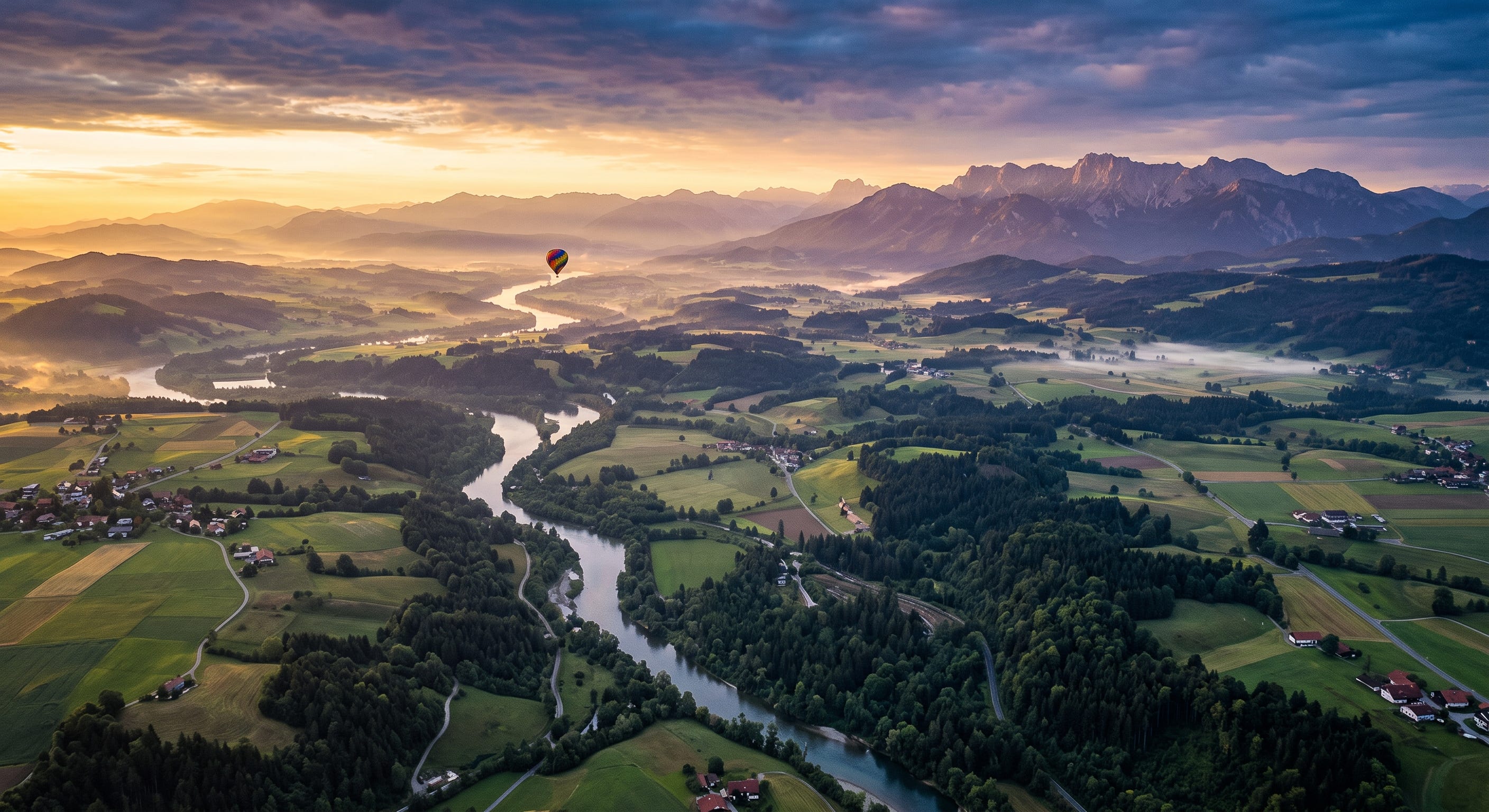
a watershed
Think of a watershed.
Rain gathers in ditches, creeks, marshes, and underground channels. From where each drop lands, the routes it takes look completely unrelated. But when we zoom out, we see that each stream is actually moving toward the same body of water.
Our interests can work the same way.
The focus becomes visible downstream, which is why forcing a niche can feel so violent. It’s like choosing one creek and damming the rest before learning where the water was even going.
finding the sentence
If your life feels like a collection of unrelated interests, try moving the question up one level.
Instead of asking, “Which one of these is my focus?” ask:
What larger change are all of these trying to make?
Look for a sentence spacious enough to hold all of your interests. A through-line.
Creating stability for my family.
Helping living systems move through change.
Making people feel less alone.
Building places where life can flourish.
The sentence may stay rough for a long while.
You may discover your focus by seeing the relationships among the things you care about.
Your intuition has been guiding you towards it, even unconsciously.
Your attention has been returning to it.
Your life has been leaving clues.
Zoom out until you can see what where the water is even going.
FYI: I’ve been putting together a weekly newsletter called For People and Planet. It’s where I share stories about climate solutions and the people working on them. If you’d like to read along, you can find it here: forpeopleandpla.net
Further reading:


For more like this, follow me wherever you connect with friends:
Bluesky 💖 LinkedIn 💖 Mastodon 💖 X 💖 Instagram 💖 TikTok 💖 Threads 💖 YouTube 💖 Facebook
With love, Bri Chapman