

we know that muscles grow through resistance. we understand that lifting weights creates micro-tears that rebuild stronger. yet when it comes to the rest of our lives, we often treat all resistance as pathology. or worse, as a personal failure of boundaries.
our culture offers us two equally broken scripts:
either avoid all stress entirely (hyper-protective wellness culture) or
endure all stress (hustle culture, bootstraps, trauma valorization).
both are misunderstandings of how our bodies and lives actually grow.
we need to learn to tell the difference between the kind of discomfort that strengthens us and the kind that breaks us down.
the four types of discomfort
not all discomfort is created equal. the problem is that we’ve collapsed very different experiences into one bucket and treated that bucket as something to avoid at all costs— often under the banner of wellness, boundaries, or peace.
there are four key types of discomfort I think we should look at more deeply:
social discomfort: using underdeveloped muscles
it is a joy to be hidden, and a disaster not to be found.
showing up. being awkward. being seen. following through on plans you’re tempted to cancel.
the discomfort here is from underuse, not injury. when we disappear too completely into our protected peace, we’re not healing. we’re atrophying.
avoidance doesn’t protect these muscles. it guarantees they never strengthen.
What’s Your Relationship With Control?
Ever wondered how you handle life’s uncertainties? Discover your true control style with this insightful quiz. Uncover whether you grip, release, or pretend, and learn how to navigate the balance between what you can and can’t control. Ready to reveal the real you?
creative discomfort: micro-tears, not failure
you can measure your worth by your dedication to your path, not by your successes or failures.
silence. inconsistency. making work that doesn’t land. sitting with not-knowing.
creative work creates micro-tears in our identity: i thought i was better than this. i thought i knew what i was doing.
that pain is not evidence you should stop. it’s evidence you’re actually working the muscle.
but endless output without rest and constant self-criticism is overtraining.
some phases are meant to feel incoherent.
the chrysalis doesn’t look productive, but transformation is happening.
moral discomfort: load-bearing strength
the sad truth is that most evil is done by people who never make up their minds to be good or evil.
staying present to suffering. not opting out. not numbing. letting what you love actually cost you something.
this is like core strength: invisible, stabilizing, essential. moral discomfort is the price of staying awake in a world that desperately wants us to look away.
avoiding it doesn’t create peace. it creates collapse under pressure.
but also: carrying everything alone is spinal injury. choosing where to put the load, who to show up for, how to participate is discernment.
existential discomfort: adaptation stress
the dizziness of freedom.
uncertainty. impermanence. not knowing who you’re becoming.
this discomfort is adaptive stress: the kind systems need when environments change.
trying to eliminate it through rigid routines, optimization, or certainty rituals is like bracing a joint so tightly it loses mobility. the body survives but the movement dies.
This is a community of people thinking deeply and feeling a lot. You’re invited to be part of that. No pressure, just honesty.
protecting your peace vs avoiding your life
peace is the intentional allocation of energy.
for me, i protect my peace by having fewer, closer friends. by prioritizing family. by consciously allowing my life’s work to take me out of my peace in that domain, so i have energy for what matters most.
you don’t train every muscle every day. you don’t ignore pain signals. you choose where to put the load. peace is about strategic recovery, not permanent sedation.
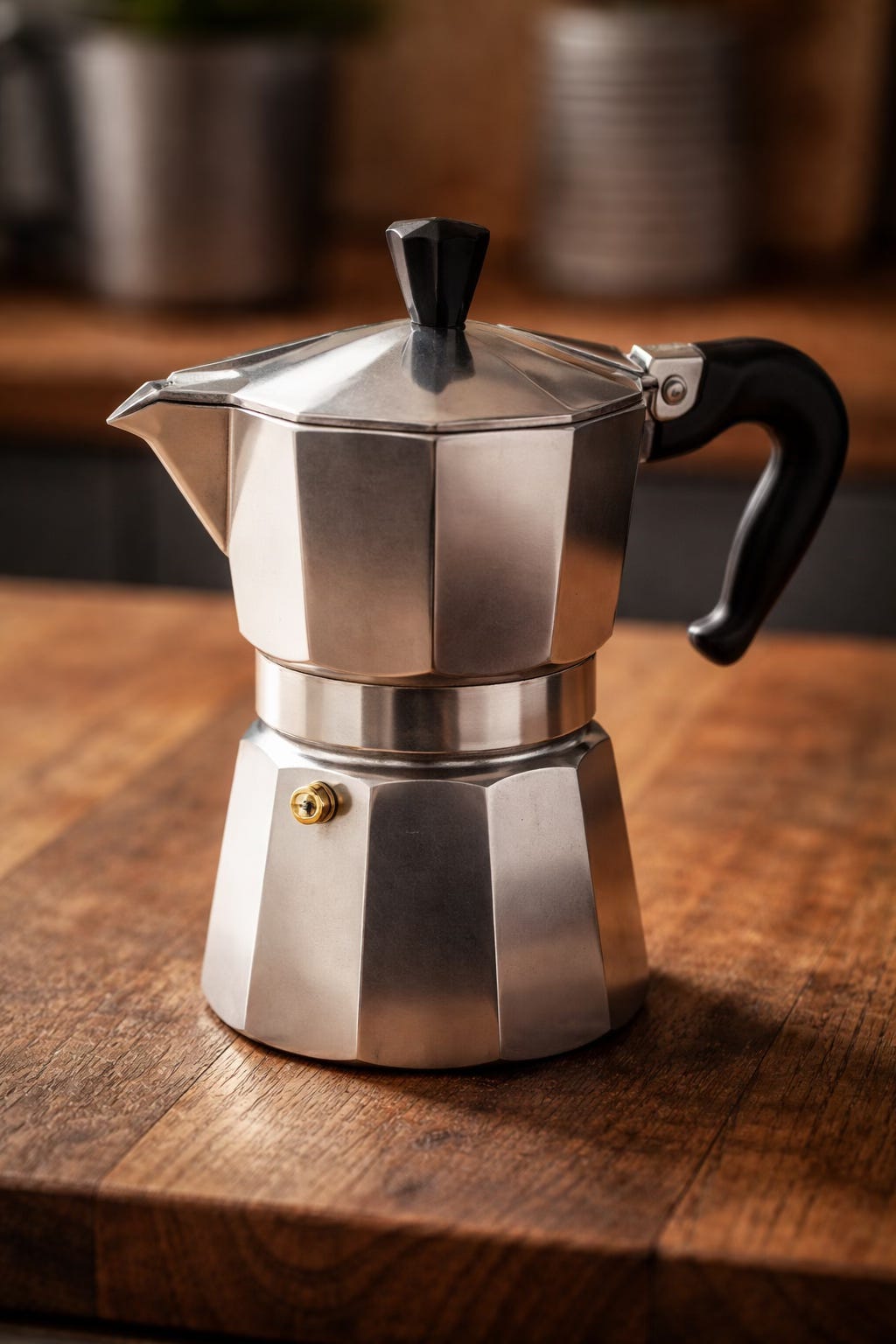
break up the monotony
there’s more to life than constant stability. when your days start blending together, do at least one thing to break up the monotony: walk a different way to work, wear that dress hanging in your closet for a “special occasion,” book the trip.
I love this list from jacqueline. She says:
I made a list titled “The Art of Inconvenience.” The list includes:
Tea kettles
Record players
Moka pots
Bookstores
Thrifting
Polaroids
High heels
Magazines
A bit random, I know, but what ties them together for me is this: they require more effort to enjoy than the simpler alternatives. You may walk faster in your everyday flats, but you’ve been wanting to wear those heels, and you should – even if they’re going to slow you down. It’s easier to play a summarized version of an article on your phone than to actually read it in a magazine. It’s more convenient to use the espresso machine, but with the moka pot, the flavor is so much richer.
(Also on my YouTube at: https://youtube.com/shorts/l44rjnUciNk?feature=share)
what we’re actually avoiding and why
Existential Kink suggests that somewhere beneath our conscious awareness, we might be getting something from our “stuckness.”
maybe it lets us stay small and safe. maybe it protects an identity we’ve grown comfortable with, even if that identity is “the person who never has time” or “the person who’s too anxious to try.”
nothing ever goes away until it has taught us what we need to know.
what if our discomfort and our obstacles aren’t blocking our power, what if they’re revealing where it’s been hiding all along?
avoidance itself is a choice, and sometimes the thing we’re protecting ourselves from is actually the very aliveness we claim to want.
I write for free, once or twice a week, but the real joy is hearing from readers. You’re always welcome to respond. Hit ‘reply’ or send me a message below.
what kind of life are you training for?
so here’s what i’m really asking:
is this discomfort strengthening me, or tearing me down?
which muscles in my life have gone unused out of fear?
where am i calling injury what is actually growth?
and what familiar patterns am i clinging to that keep me from becoming who i’m afraid to be?
and maybe most importantly: what kind of life am i training for?
because a life scrubbed of all discomfort may be clean, but nothing grows there. rich soil is messy. full of bacteria, fungi, decay, constant interaction and exchange. sterile environments prevent disease and also prevent life.
no mud, no lotus.
the mud is necessary. but drowning in mud is not. the skill is learning to tell the difference — and learning to recognize when we’re unconsciously choosing the mud because it feels safer than the flower.
FYI: Each week I also share stories through For People and Planet, a newsletter focused on climate solutions and hope for the future. You can find it here if you’d like to follow along: forpeopleandpla.net
Further reading:


For more like this, follow me wherever you connect with friends:
Bluesky 💖 LinkedIn 💖 Mastodon 💖 X 💖 Instagram 💖 TikTok 💖 Threads 💖 YouTube 💖 Facebook
With love, Bri Chapman
Harmful/helpful stress?
May we learn to discern when
to push, pull, press, rest.
...
Anxious, doubtful, scared?
Avoidance atrophies, maims.
Accept growing pains.